
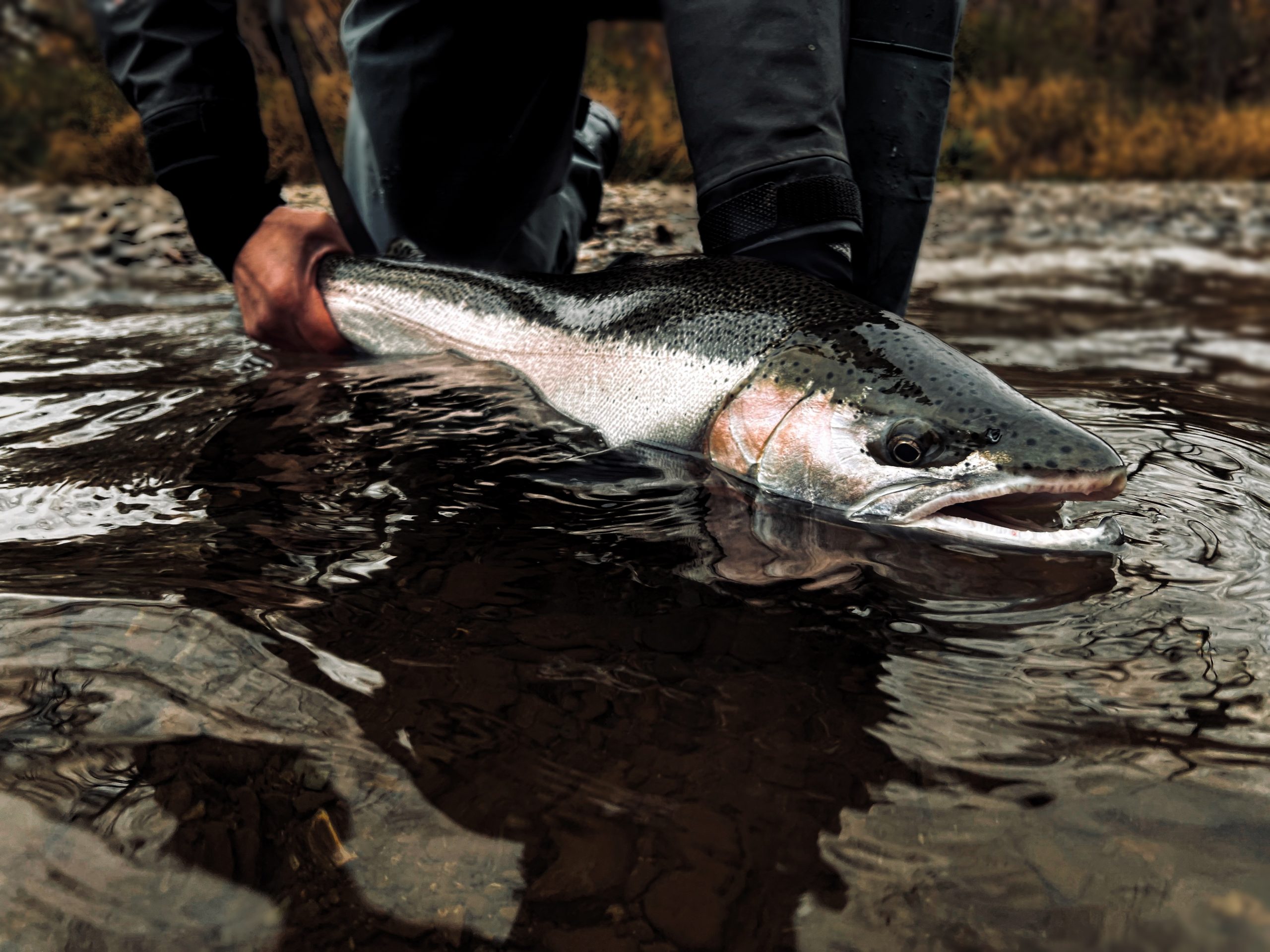
LEARN
STEELHEAD
by: Daniel Natareno
Many anglers don’t know that the majority of rivers feeding off the great lakes hold a variety of resident trout, migratory steelhead and salmon. Ontario rivers have shown much potential and have open doors to a truly unique fishery. Fishing for Ontario Trout and Steelhead can definitely be a challenge but after the right amount of trial and error along with time on water anyone can get on these fish.
Catching your first steelhead can often be seen as a rite of passage towards becoming an avid river fisherman. The first step towards learning how to catch these fish is trying to understand the most you can about them and how they are fished.

A Little History
Today, one of the most important and self-sustaining populations of transplanted steelhead in the world is in the Great Lakes. Steelhead and salmon were first properly introduced into the great lakes on the US side (On the Aux Sable River) during 1874.
As for Ontario, steelhead were first brought in privately to a head water pond on the Nottawasaga River sometime during the late 1890s. Eventually, thanks to stocking efforts made by the USA and our OMNR, a great lakes steelhead and salmon fishery was born.
Life Cycle
Both steelhead and salmon share very unique spawning habits and life spans. Most salmon in Ontario live a very short life span somewhere between 3-5 years old, when mature, they will run up the river to prepare for their spawn. Salmon don’t usually feed in rivers but will often bite skien/row out of aggression. Upriver, salmon will reduce their feeding activity and use up nearly all of their energy, fighting against strong current. Once they are done spawning their bodies will keep on deteriorating until death.
Unlike salmon, Steelhead don’t die after spawning and some may spawn three or four times within their life span before expiring. Steelhead will run up the river during cold temps and usually make their way out after their spawn, they maintain a well fed diet (in the river) of bugs, roe and earthworms.

When Can You Fish For Steelhead?
Salmon hold in harbours and run up the river as early as late August while finishing throughout October. As for Steelhead, they will run and hold in strong numbers here in Ontario usually between the months of September to the end of May, giving us Anglers a strong 9 months of river fishing. Always be mindful before fishing during winter months as some rivers will close during Dec/Jan until April.
Always refer to the newest version of the Ontario Recreational Fishing Regulations (https://files.ontario.ca/mnrf-fishing-regulations-summary-2021-en-2020-12-10.pdf) to make sure you’re fishing within season and legally. That being said, many parts of our rivers are open during the entire season. It’s very unethical to fish for summer run Steelhead and Salmon, as the water is far too hot during this time of year and will exhaust the fish to death if caught.
What is Center Pin Fishing?
Without a doubt utilizing a center pin allows for the best possible success while river fishing for steelhead or salmon. Early versions of modern day center pins were very much variations on the first reels ever created in history. Center pins are simple in design, they look much like a large arbour fly reel, but have no drag, which allows it to spin freely on its axis (the center pin). Center pins have clickers, which allows the reel to lock its free spool for easier mobility while changing spots. A center pin rod on the other hand is long and usually ranges between 10-15ft in length allowing for longer casts and better control over your float.
These rods usually have a very slow action (a lot of bend from rod tip to cork) in order to protect light leaders and refrain from pulling hooks from fish. The true advantage that comes with centerpin fishing is having a drag free drift that allows for the most natural presentation possible by allowing your bait to move at the same speed or slower than the river’s current. Since Center Pins have such a large arbour, line memory is significantly decreased (compared to using a spinning reel) allowing you to have a line that flows through your guides smoothly.

What Are Common Steelhead Baits And How Do I Use Them?
The most common baits used for steelhead are beads, flies, artificial worms and roe. These baits can all be used while float fishing where a series of split shots is used leading to the bait. The arrangement of the split shot under the float should ensure that the bait is the first thing fish see (tip: don’t put split shot on your leader line).
Beads
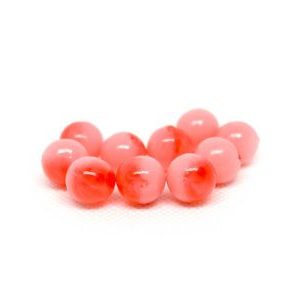
One of the newest and most common steelhead baits, their growing popularity can only be credited to how effective they are as a bait. Beads are meant to imitate single eggs(roe) flowing down the river. They come in a variety of sizes and colours for all river fishing applications.
Flies
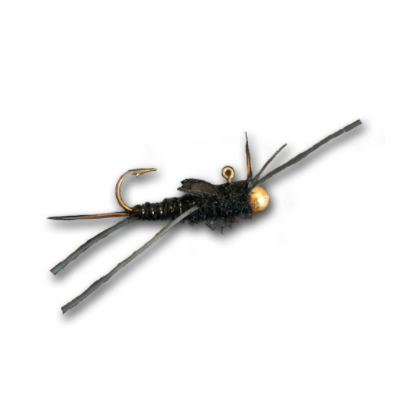
Usually meticulously hand tied using natural materials, using flies is a great way to match the hatch. Steelheads eat a variety of different bugs that get washed up in the river. Float fishing flies are extremely effective and can be something “different” that’ll get those stubborn fish to bite.
Roe Bags
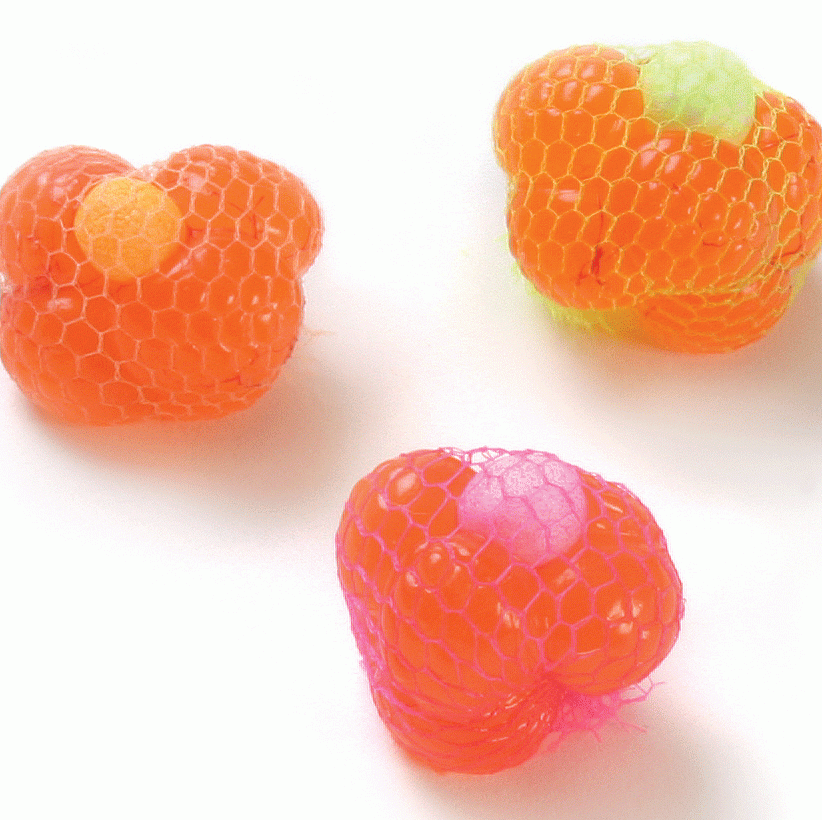
Is quite possibly the most classic way to fish for steelhead, it’s been working for years and continues to prove to be a successful bait for these fish. You can change the way roe is presented to these fish by using different colours of mesh when tying.
Plastic Worms
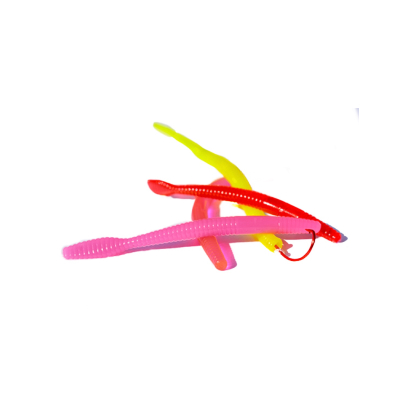
Are often meant to imitate real river worms and can annoy aggressive fish into biting. These worms come in a variety of colours and can be used in multiple situations.
Choosing The Right Gear
When choosing gear it’s important to understand what works for you may not work for others. It takes time to figure out what you like but once you have a comfort level with equipment you trust, it goes a long way. A lot of river fishing can be considered an investment, rods and reels don’t tend to go down in value and if properly cared for can last you a lifetime.
When choosing your terminal tackle you should always keep in mind the following: hook size, leader line abrasion resistance and softness, split shot pattern, lb test of mainline and lb test of your swivel. With time everyone develops their own style of fishing based on what works for them and gives them confidence.
Handling Steelhead/Trout
To maintain our quality fishery it’s up to all of us to promote ethical habits and the proper handling of fish. When landing any steelhead to ensure the survival of the fish, use a quality net made out of either mesh or rubber… No nylon or knotted nets as this will split the fish’s fins, burn their skin and may cause the fish to go blind. Do your best not to land your fish near any rocky banks where it can knock itself out, utilize your net as much as you can. Always wet your hands before touching any trout, when handling the fish in hand do not hold them by the gills or hoist them up by the tail.
Hold your fish horizontal, one hand underneath the belly and one hand on the trail. Try to keep your fish in the water during the entire landing process, if you must take a quick picture with the fish out of the water, have them out for no longer than 10 seconds. Keeping any trout out of the water for longer than 45 seconds(especially during winter months) will cause the fish permanent gill damage. If you’re not careful your fish may kick off strong but the long term damage will have been done. Far too often extremely healthy and large trout will wash up on banks due to mistreatment during their release.

Steelhead Record
The previous record steelhead was caught in the Nottawasaga weighing in at 29.12lbs, since then it has been beat by 11lb, crowning the new Ontario record at 40.68lb
Salmon Record
The Ontario record chinook salmon is 47.13lb